
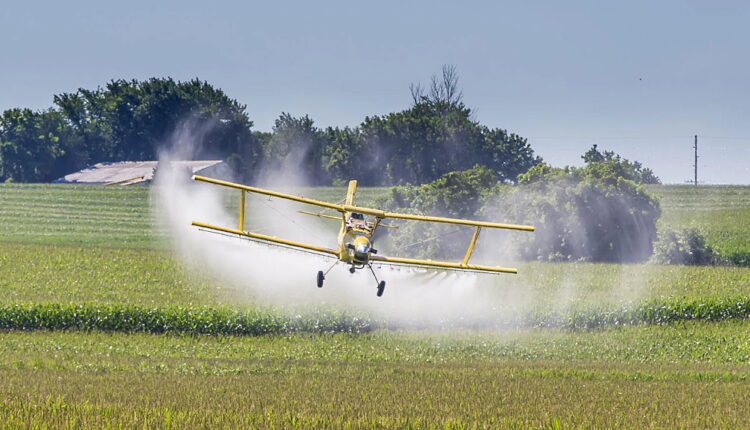
Airplane Crop Duster Day recognizes the aircraft used in aerial application for agriculture and public health work. Although the subject may seem unusual, crop-dusting aircraft played an important role in the development of modern farming by allowing large areas to be treated quickly and efficiently. The day also offers an opportunity to learn more about the history, technology, and regulation of aerial spraying.
History of Airplane Crop Duster Day
The practice of spraying crops from the air began in the early 1920s, not long after the rise of aviation. By the 1940s, aerial application had become more common in agriculture. In later decades, growing concern about environmental damage and pesticide overuse led to tighter regulation, and aerial spraying is now restricted or prohibited in some places.
Even with those limits, crop dusting is still used in certain situations because it can cover large areas without the ground compaction or plant damage caused by heavy land-based equipment. Aerial application has also been used in mosquito control and other public health efforts. Today, stricter safety standards and oversight are intended to reduce risks to people, wildlife, and surrounding land.
Interesting Facts About Airplane Crop Duster Day
Airplane crop dusting combines aviation skill with agricultural precision, which is one reason the subject continues to attract interest.
- Aerial spraying can reduce the soil compaction and crop damage sometimes caused by ground machinery.
- Different countries use different aircraft types, depending on farm size, terrain, and regulation.
- Crop-dusting pilots must fly with exceptional precision to achieve proper coverage and reduce drift into unintended areas.
These details help explain why aerial application remains a specialized field within aviation and agriculture.
How Airplane Crop Duster Day Is Observed
A practical way to observe Airplane Crop Duster Day is to learn more about the history and techniques of aerial application. Reading articles, watching documentaries, or exploring the history of agricultural aviation can provide useful context for understanding how the practice developed and why it remains relevant in some areas.
The day can also be used to reflect on the balance between agricultural efficiency, environmental responsibility, and public safety. For people interested in aviation history, it is also a chance to learn more about the pilots and aircraft involved in this specialized type of flying.
When Is Airplane Crop Duster Day in 2026?
Airplane Crop Duster Day is observed on August 3 each year.
Observations
| Weekday | Month | Day | Year |
| Monday | August | 3 | 2026 |
| Tuesday | August | 3 | 2027 |
| Thursday | August | 3 | 2028 |
| Friday | August | 3 | 2029 |